Blog · Procesos Creativos
From concept to system: turning an idea into an applicable identity
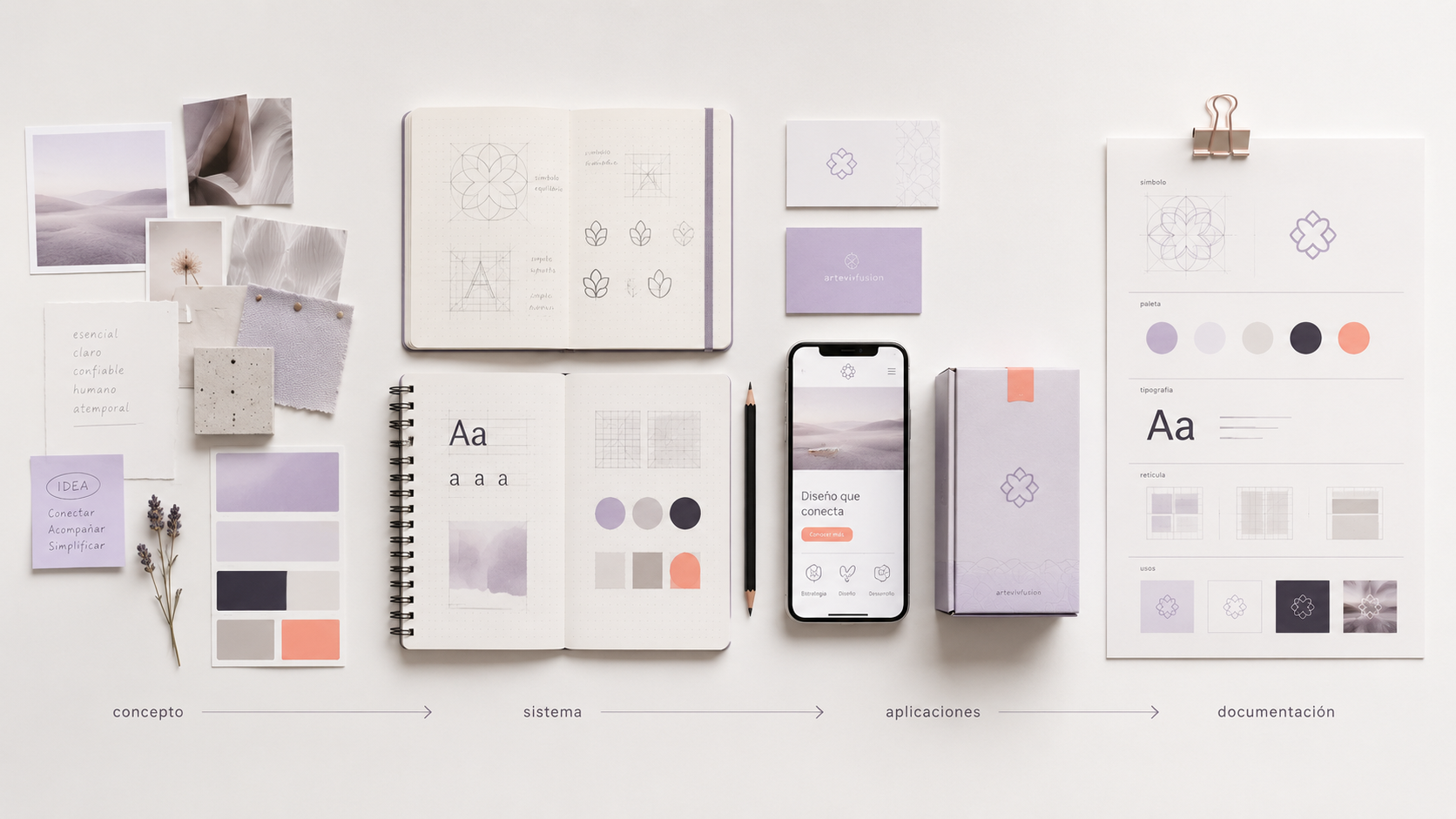
Every identity project begins with ideas: concepts, references, values, feelings and goals that do not yet have a defined visual form. The challenge is to turn that information into design decisions that can be used consistently.
Understand before designing
Before choosing colours or drawing a logo, it is necessary to understand what the brand wants to communicate, who it is addressing and what makes it different. This stage makes it possible to make intentional decisions instead of relying only on aesthetic preferences.
Translate concepts into visual resources
A concept can be expressed through geometry, contrast, rhythm, colour, type, photography or illustration. What matters is that each choice relates to the personality being built.
As those decisions begin to connect, a visual language of its own emerges.
Test the identity in real situations
An identity should not be evaluated only on a blank page. Applying it to social media, editorial pieces, packaging, digital interfaces or promotional material quickly reveals whether the system works.
Applications reveal problems with legibility, hierarchy and flexibility that can go unnoticed during the conceptual stage.
An identity becomes real when it can leave the concept and work consistently in different contexts.
Document to maintain consistency
Once the system is built, documenting its main rules makes it easier to maintain over time. Palettes, typefaces, proportions, correct uses and composition criteria help new pieces remain part of the same identity.
The final result is not just a set of graphic files, but a communication tool capable of supporting a brand’s growth.
Conversation
Leave a comment